
The Healing Stones of Suin – A Journey into the Mysteries of Prehistoric Healing
Pierre van Eijl
With a song, ‘Tell It to the Stones’, by Sophia Dortolle
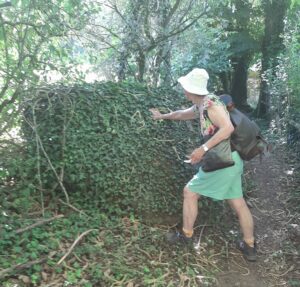
Legendary Stones
Some landscapes invite us to look at them. Others seem to look back at us. During a holiday in Burgundy, my walking companion Erna and I come across a hiking trail near the small village of Suin in France on the internet: the Trail of Legendary Stones (Le Sentier des Pierres à Légendes). The names of the places along the route are enough to stir the imagination: a dolmen, Caesar’s Chair (the Fauteuil de César), the Devil’s Hill, a sacrificial stone, and other rocks to which stories from a distant past still cling.
Our walk begins at the church and the café Au Petit Suin. From there, we follow the orange signs marked Pierres des Légendes. The path leads past meadows and, at first, seems to hold little mystery. Grass, trees, silence. No stone that immediately catches the eye. But as the footpath narrows, something changes.
Large stones, half-hidden by vegetation, appear among the bushes and plants. And near these stones, I suddenly experience a powerful metaphysical energy. It is a presence I recognize from megalithic structures: dolmens and other stone monuments dating from an age whose spiritual knowledge we can scarcely comprehend today.
According to the images that emerged during my earlier aura readings, people in those distant times possessed knowledge of how to energize stones. They built not only with weight, shape and orientation, but also with energy. In this way, they created places with deliberately structured metaphysical energetic properties, used by priests and priestesses for rituals and healing practices.
We continue downhill. Another stone. And another. Again and again, that same remarkable energy.
Why are there so many energetically charged stones here, of all places? And why along a path?
At the bottom, I stop.
I shut out the ordinary world around me and focus my attention on the path as a whole. Through an aura reading, I attempt to tune in clairvoyantly to what might once have taken place here.
Slowly, the present begins to fade.
And then the images appear.
The Healing Path
I see a man in pain. The left side of his body hurts particularly badly. The pain extends into his left leg, causing him to walk with a limp. He has carried this burden for years. What may once have been bearable has gradually grown worse.
That is why he is here.
He knows that what awaits him will not be easy. But neither does he wish to continue living as he has been.
At the bottom of the path, a priest is waiting for him, a man whom we might nowadays call a shaman.
“Why have you come?”
The man speaks of his pain, his leg, and the years during which his body has increasingly seemed to fail him.
He has brought food as payment: good food, carefully selected. The priest accepts the offering.
Then he looks intently at the man.
“Know that on this path you must be honest. Completely honest. Those who lie here cannot be helped by the Gods.” [Here, the term ‘God’ is used. Nowadays, we would use terms such as ‘angel’, ‘spiritual master’, or ‘healing guide’.]
The man swallows.
Honesty is particularly difficult for him. He often remains silent to avoid offending others. He conceals what he truly feels.
But he nods.
And together they begin the ascent.
Who Are You Angry With?
Slowly, they make their way up the Healing Path.
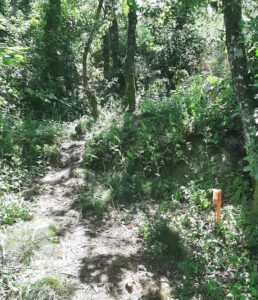
Figure 1: Ascending the Healing Path
“Slowly,” says the man. “I cannot walk that fast.”
At one of the energetically charged stones, the priest stops.
“Tell the Gods who you are angry with.”
The man looks at him uncertainly.
“And ask them to help you release your anger.”
A silence follows.
Then he whispers, “I am angry with my neighbor. He mocks me because I walk with a limp.”
“Louder.”
The man repeats his words.
“Louder. The Gods must be able to hear that you are angry.”
Now the man raises his voice. He shouts the words aloud. At first awkwardly, then with increasing force. Years of suppressed resentment suddenly find a voice.
“Again,” says the priest. “And again. Ask the Gods to free you from your anger.”
The man shouts.
And as his voice echoes among the stones, something unexpected happens: he feels a sense of relief.
As though a burden he has carried for so long has become a little lighter.
“Good,” says the priest. “Continue. Who else has made you angry?”
Memories begin to surface. His daughter, who once laughed at him because he said something incorrectly. A stronger man who took something from him. Old humiliations he thought he had long forgotten.
But apparently, his body had not forgotten them.
Whom Do You Love?
At the next stone, the task changes.
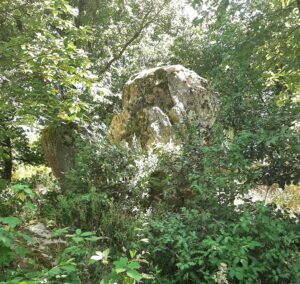
Figure 2: A remarkably large energized stone on the Healing Path
“Tell the Gods whom you love,” says the priest. “And speak with passion.”
Once again, the man begins cautiously.
He loves his son. He is proud of him.
He thinks of a girl he fell in love with as a young man, but whom he could never have. He thinks of his wife, especially their first years together, when everything was still new and they were gentle and loving towards one another.
“Say it,” the priest encourages him. “Do not let your love remain merely a thought. Let it shine.”
The man speaks their names. He repeats his words.
And then he begins to feel warm.
He feels something opening around his heart. As though not only his voice, but his entire chest remembers what love is.
Whom Do You Hate?
They continue climbing.
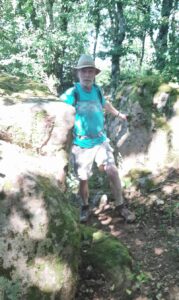
Figure 3: Walking among the energetic healing stones
The man notices that something is beginning to flow through his body. Then they reach another stone.
“Whom do you hate?” asks the priest.
The man is startled.
Expressing anger had already been difficult enough. But hatred?
“Let the Gods hear it,” says the priest. “Otherwise, they cannot help you.”
For a long time, there is silence.
Then the man says, “I hate the man who tried to take part of my land. He harvested plants that belonged to me.”
“Again.”
The man repeats it.
Then another memory surfaces: the man who tried to take his daughter away from him.
That hatred, too, is given words.
And once again, he notices that speaking it aloud does not make him darker, but lighter. As though the hidden poison loses its power precisely because it is finally allowed to come into the light.
What Do You Curse About Your Body?
The priest looks at him.
“And your body? What do you dislike about it? What do you perhaps even curse?”
The answer comes immediately.
“My crippled leg. The pain. I hate that my body is like this.”
He even admits that he has struck the painful parts of his body, as though he could force it to obey him again.
“Say it aloud,” says the priest. “And ask the Gods to dissolve the curses you have directed towards your own body.”
As the man speaks, he realizes how harshly he has treated his own body.
That body has carried him for years.
And yet he has cursed it.
Slowly, his aversion gives way to something else.
Not love, perhaps, not yet.
But gentleness.
And appreciation.
What Brings You Joy?
They continue upwards towards another stone.
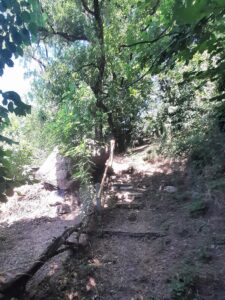
Figure 4: Continuing uphill along the Healing Path
“Now tell the Gods what makes you happy.”
The man looks surprised.
He has come to speak about pain. About problems. About everything that is wrong.
Not about joy.
He has to think for a long time.
Then a smile appears.
He feels happy when his land is well tended. When his wife is happy and kisses him. When there is laughter at home. When the people of the community gather together and enjoy themselves.
The more he speaks, the more vivid the images become.
And as he expresses them aloud, he realizes that joy is not merely something that happens to you.
You can also summon it.
You can remember it.
You can make room for it.
Ask the Gods for Help
Then the priest says:
“Ask the Gods to help you find and resolve the cause of your pain. Ask loudly and clearly.”
The man does as he is instructed.
And suddenly, images from his past flash through his mind.
He sees himself hanging by one hand from a high tree branch. He remembers straining a muscle while doing so.
He remembers someone punching him in the side, a blow that caused him pain for days.
He remembers how, later, he struck the painful spot himself out of frustration, as though violence could heal the body.
“Ask again,” says the priest.
Then an older memory emerges.
He is still a child.
In a barn, he takes something he is forbidden to touch. He falls and seriously injures himself. But out of fear of punishment, he tells no one what has happened.
The pain remains unspoken.
The fear remains unspoken.
The secret remains unspoken.
Now, many years later, he finally speaks of it.
Again and again.
And as he does so, he feels something shift in the painful part of his body.
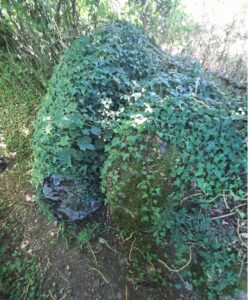
Figure 5: An energized stone along the path
What Are You Ashamed Of?
“We are almost at the healing stone,” says the priest. “But first, one more thing. Is there something you have done that you are ashamed of? Something you hope no one will ever discover?”
The man blushes.
A memory from his youth comes to the surface.
He was playing naked in the water with others. There, he experienced intimacy with a girl, although this was forbidden by the rules of his community. Later, she married another man.
It is an old secret.
But the shame is still alive.
The man tells his story.
And once the words have been spoken, he once again experiences that remarkable sense of relief.
What had to remain hidden no longer needs to be guarded.
The Healing Stone
“Now we shall go to the healing stone,” says the priest.
Before them lies a large boulder.
The man is instructed to lie down upon it.
A second priest is summoned. One holds his hands, while the other supports his head.
Then it begins.
The man feels warmth flowing through his body.
A hand is placed on the painful area near his diaphragm.
Suddenly, something deep inside him seems to release.
So powerfully that he gasps for breath.
Then something else.
And something else.
As though knots that had been tightly drawn for years are coming undone, one by one.
Then a soothing warmth spreads through the troubled side of his body, from top to bottom.
He understands, without anyone needing to explain it, that healing takes time.
Perhaps days.
Perhaps weeks.
His feet are rubbed with a gentle ointment.
The priests carefully help him to his feet.
“Take it slowly,” says one of them. “During the coming weeks, you must allow your body to rest. What has begun within you needs time to continue.”
“Am I healed now?” the man asks hopefully.
The priest looks at him.
“The tension has left your body. That helps. We shall see later how the healing progresses.”
Giving Something Back
Supported by both priests, the man continues uphill.
At another energetically charged stone, they stop.
“Listen,” says the priest. “You have received much. What can you now give to others?”
The man remains silent.
He feels gratitude.
Not the gratitude of someone who believes he must repay a debt, but the natural desire to pass on some of the light he has received.
“I shall help my daughter when she marries. I shall give her a beautiful cooking pot. And I shall make sure there is good food at the wedding.”
The priest smiles.
“That is a beginning. But not everything you give needs to be a possession. Sometimes a kind word is more precious.”
The man thinks of his neighbor.
“Then I shall greet him kindly again.”
He thinks of his wife.
“I shall let her know how much I appreciate her. She longs for a pendant made from a beautiful stone with a hole through it. I shall look for one for her.”
And he thinks of his son.
“I shall tell him that I am proud of him. That I see how hard he works on the farm.”
The priest nods.
Perhaps, it seems, healing does not begin only when pain disappears.
Perhaps it also begins when someone learns to give again.
A Wish for the Future
One final stone awaits them.
Figure 6: The last strongly energetic stone of the Healing Path
“This is the last one,” says the priest. “Here you may make a vow. Or express a wish.”
He asks the man to close his eyes.
“Imagine that you are healed. Not partly. Not almost. Imagine that your body is free from discomfort and that you truly feel well. Picture it as clearly as you can.”
The man closes his eyes.
To his surprise, the image appears almost immediately.
He sees himself.
Standing upright.
Free.
Light.
He can almost feel what it is like to be that man.
“Now send that image upwards,” says the priest. “To the Gods. And ask them to help you make it a reality.”
The man does so.
In his mind, the image rises.
And for a moment, there is only silence.
Departure
“Who came with you?” asks the priest.
“A friend. He is waiting further along, near a house. There is a bench outside.”
Together, they walk towards it.
When his friend sees him, he looks surprised.
The man who returns is not the same man who set out along the path earlier. The pain has not disappeared. His leg has not suddenly been completely healed.
And yet something radiates from him that was not there before.
“Take things slowly,” the priest warns him one last time. “Do not force anything. Give your body the chance to recover.”
Then they say goodbye.
Later
Days turn into weeks.
Gradually, the man notices that his body is changing. The pain diminishes. He walks with less of a limp. Life becomes lighter.
Later, he will return to the Healing Path once more. That visit, too, will help him further.
But perhaps something even more important has changed.
He expresses his appreciation more often.
He says what he feels.
He has become kinder towards others and perhaps towards himself as well.
And the people around him respond to this.
The man who once so often sighed and complained becomes someone who can encourage others when life is difficult.
The path has not merely touched something in his body.
It has awakened something within him.
The Song: Tell it to the Stones
Sometimes a chance encounter gives rise to something special.
Not long ago, I came into contact with Sophia Dortolle, who has a deep fascination with ancient megalithic monuments and the stories that have woven themselves around these mysterious stones over the centuries. For Sophia, these age-old stones are more than silent witnesses to a distant past. They carry memories, preserve stories that have survived the passage of time and seem, to those willing to listen, still to have something to tell us.
The prehistoric story above captured her imagination and inspired a special song. Through her music, Sophia seeks to bring a long-vanished world back to life: a world in which human beings were still intimately connected with nature, the earth and the mysterious stones that stood like silent guardians in the landscape. In earthy sounds, mystical melodies and storytelling through music, something of that lost world can still be heard. As though, for a brief moment, the stones break their centuries-long silence and the echoes of the past become audible once more. With the help of artificial intelligence, Sophia gave this inspiration musical form. The result was the song “Tell It to the Stones”, a musical journey to a time when nature, humanity and mystery were still inseparably connected.
The song can be heard on YouTube.
Reflections
When I look at the path again after the aura reading, the stones take on a different meaning.
What if this really was once a Healing Path?
A path on which someone did not simply walk towards a healing stone, but was prepared step by step.
Stone after stone.
Emotion after emotion.
Anger.
Love.
Hatred.
Rejection of one’s own body.
Joy.
Painful memories.
Shame.
Gratitude.
And finally: an image of a possible radiant future.
In the images from the reading, the stones together form what might be called an energetic route. The priest guides the visitor not only physically upwards, but also through his own inner landscape.
What is hidden is spoken.
What is blocked is allowed to move.
What has been forgotten is remembered.
Only then does the actual healing treatment take place.
It reminds me of the Healing Path near the Fountain of Eternal Youth in Brittany.
Perhaps this is precisely where the secret of such ancient places of power lies: not in a single stone, a single ritual or a single miraculous moment, but in a carefully structured journey from the outer world to the inner self.
A journey in which the human being becomes part of the ritual.
Further Along the Trail of Legendary Stones
The Healing Path of Suin turns out not to be the only mystery along the Sentier des Pierres à Légendes.
Further along lies a so-called sacrificial stone.
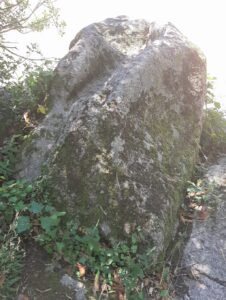
Figure 7: Sacrificial stone
In the photograph, it appears to be more steeply inclined than it actually is. At the site itself, it is clear that the stone lies much more horizontally.
Further still, we reach the Fauteuil de César, Caesar’s Chair.
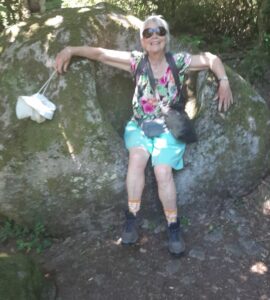
Figure 8: Fauteuil de César, with my walking companion Erna
Here, too, there is that special atmosphere which such places can possess: a mixture of landscape, stone, legend and something that is difficult to capture in words.
Every place bears a name, and every stone has a story.
And sometimes, when you remain still long enough, it seems as though an even older layer lies hidden beneath those stories.
More About Megalithic Monuments
Further research accounts concerning prehistoric rock art and the possible original functions of dolmens, menhirs, stone circles, rocking stones and cupules, investigated through aura readings, can be found in the Mijnhunebed (My Dolmen) section of the Hunebedcentrum website (Dolmen Centre’s website in Borger, The Netherlands), and on the Kundalini Network website.
The last website also provide a more detailed explanation of what is meant by an aura reading.
My book Magische stenen, korte verhalen uit de hunebedtijd (Magical Stones: Short Stories from the Age of the Dolmens), published by Obelisk in Dutch language, contains further accounts of aura readings conducted at dolmens.
These readings suggest that dolmens may originally have served not as burial chambers, but as deliberately constructed spiritual places of power.
The book also explores possibilities for further scientific investigation into the presumed spiritual and energetic properties of megalithic monuments.
Anyone wishing to discover how closely their own understanding of dolmens corresponds to the findings of these aura readings can take the Dolmen Quiz (Dutch language).
For perhaps the stones are not as silent as we think.
Perhaps the real question is whether we still remember how to listen.